Ken Lassman has been keeping this almanac for over a decade, He invites you to share your observations and photos in the comments section. You can find his book Wild Douglas County at The Raven Bookstore in Lawrence.
Deer Mating Moon – October
The Osage called this time Deer Mating Moon to commemoratee the very noticeable ree-appearance of the bucks, who are beginning to “rut,” which they literally do with their hooves. They find a prominent place and scrape the groundcover clear of vegetation as part of their mating ritual.
Hackberry, ash, box elder and elm trees are the first to turn yellow this month, providing nice contrast to the reds of sumac, poison ivy and Virginia creeper as their green chlorophyll plays out leaving either the yellow or red chlorophylls to collect the shorter day’s sunlight. Mid-late month spells the end of the growing cycle for annuals with the first killing frosts coming then most years. Mid-month is a great time to find native prairie patches, looking for the coppery colored grasses that distinguish them from the greens of cool season grasses such as brome, fescue and, of course, wheat.
Bird migration is building all month, with seagulls that breed in Canada passing through the area, along with pelicans, geese, and various ducks. A trip to Clinton or any other area reservoir, or the Wakarusa Wetlands is almost always a rewarding outing, whether it be for the migrating fowl around sunrise or sunset, or the changing colors of fall. This is the favorite time of year for many folks who like to be outdoors–what are you waiting for?
Deer Hiding Moon: September
The local Osage tribes called it “Deer Hiding Moon,” a time when bucks in this area are very reclusive while they finish growing antlers for the upcoming mating season. Even though they are hard to find, it is worth trying to spot a buck through binoculars this time of year to witness the softness of their antlers before they scrape off the felt to prepare for mating season.
September is the month of the autumnal equinox, mirroring March as the time of greatest daily change in the length of the day and the fastest movement of the point of sunset and sunrise on the horizon. Because of this, the word “equinox,” or equal day and night is somewhat of a misnomer because of the rapid daily changes that happen more quickly than any other time of year. Gardener/naturalist Sara Stein calls the fall the great planting time for nature. The seeds developed by the summer rains are themselves raining directly down on to the ground or coming into contact indirectly through the intestines of animals who have consumed their fruity coatings, giving them a ride and then depositing them along with some rich fertilizer for spring. Now is also the perfect time to visit some CRP native grass plantings or ungrazed native prairie to see how it is really taller than you are and how easy it would be to get lost in it.
Seeing the huge diamond of the square of Pegasus constellation rising in the east is a sure sign of fall and one of my favorite things about this time of year. The crisp, clear autumn weather is perfect for finding the northern corner of Pegasus where the constellation of Andromeda is located and seeing if you can see the Andromeda galaxy with your naked eye. The light from the Andromeda galaxy is the oldest light your eye can see without a telescope, having left the millions of stars in that galaxy over 2.2 million years ago.
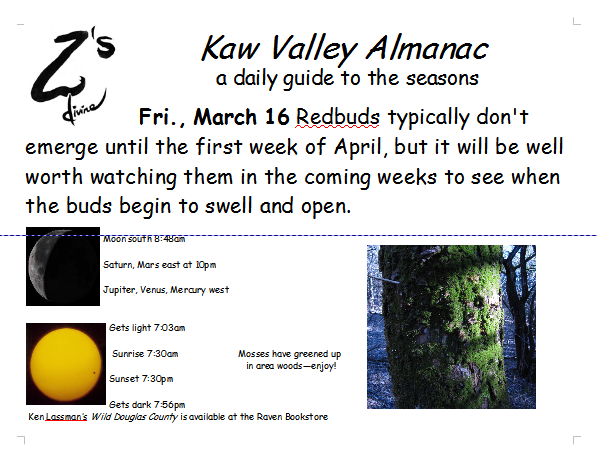


Indeed, the redbuds ARE beginning to bloom already. This is the earliest I’ve seen them opening up around here–no big surprise considering the string of windy, hot days we’ve had this week.
LikeLike
Jeff Masters of Weather Underground website chronicles the pervasiveness of this “unprecedented early heat wave” in his blog here: http://www.wunderground.com/blog/JeffMasters/article.html
LikeLike