2 thoughts on “February 24 – March 2, 2014 Kaw Valley Almanac”
The window where I’m working looks out on a small fish pond. There’s a skin of ice on it, but birds find it, sit on the ice which flexes enough to seep water from the edges. My idle question is how do the birds find this pond: I assume 1) random, flying until they see something that looks like water; 2) follow the leader, seeing other birds at the water; I wonder about 3) location memory, from previous trips to this pond. I plug in a heater on occasion to allow fish ammonia to escape during long cold spells. This pond and heated bird baths would seem to be the only sources of free water, so where would the birds have gone without human assistance? (including Bowersock turbines) Do bird counts in particular locations vary significantly within a season according to the availability of water? And of course, what about when it’s all locked up in ice?
Bert, I suspect that the local avian species know our backyards much better than we do, down to the drippy leaky gutter that is located on the south side of the house next door where the sun creates a little melted water before any other place on the block, or how the edge of your fish pond might shift slightly in the wind, creating a little open water access, etc. Water access definitely changes who is around and where birds hang out, just as does the food supply, but our feathered kin are incredibly astute in finding and accessing both things. Just think about how the nesting territories in coming weeks are going to be staked out: those birds know exactly which bush is included and which branch is contested. If we could see the landscape like a songbird, we’d be blown away.
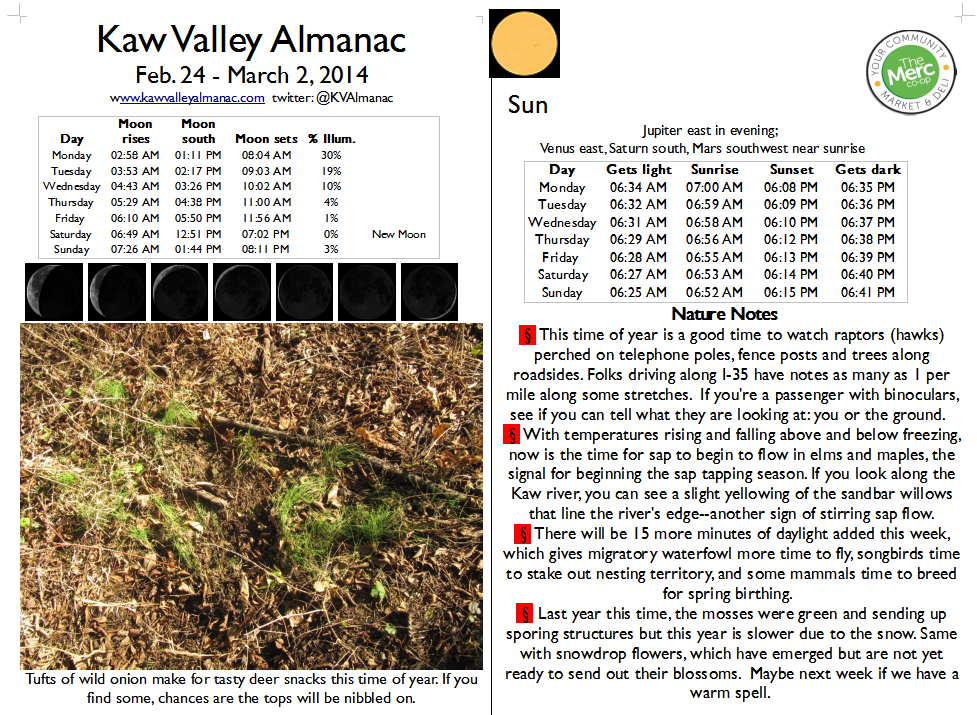
 Kaw Valley Almanac
The window where I’m working looks out on a small fish pond. There’s a skin of ice on it, but birds find it, sit on the ice which flexes enough to seep water from the edges. My idle question is how do the birds find this pond: I assume 1) random, flying until they see something that looks like water; 2) follow the leader, seeing other birds at the water; I wonder about 3) location memory, from previous trips to this pond. I plug in a heater on occasion to allow fish ammonia to escape during long cold spells. This pond and heated bird baths would seem to be the only sources of free water, so where would the birds have gone without human assistance? (including Bowersock turbines) Do bird counts in particular locations vary significantly within a season according to the availability of water? And of course, what about when it’s all locked up in ice?
LikeLike
Bert, I suspect that the local avian species know our backyards much better than we do, down to the drippy leaky gutter that is located on the south side of the house next door where the sun creates a little melted water before any other place on the block, or how the edge of your fish pond might shift slightly in the wind, creating a little open water access, etc. Water access definitely changes who is around and where birds hang out, just as does the food supply, but our feathered kin are incredibly astute in finding and accessing both things. Just think about how the nesting territories in coming weeks are going to be staked out: those birds know exactly which bush is included and which branch is contested. If we could see the landscape like a songbird, we’d be blown away.
LikeLike